
The short answer
- For water escaping into the bathroom or kitchen, call now and close the home's main shut-off only when safely accessible.
- In wet rooms, avoid electrical equipment and operate a dry breaker panel only from a dry location.
- After the water supply is off, open safely reachable sink faucets to drain remaining water while a plumber handles the broken pipe.
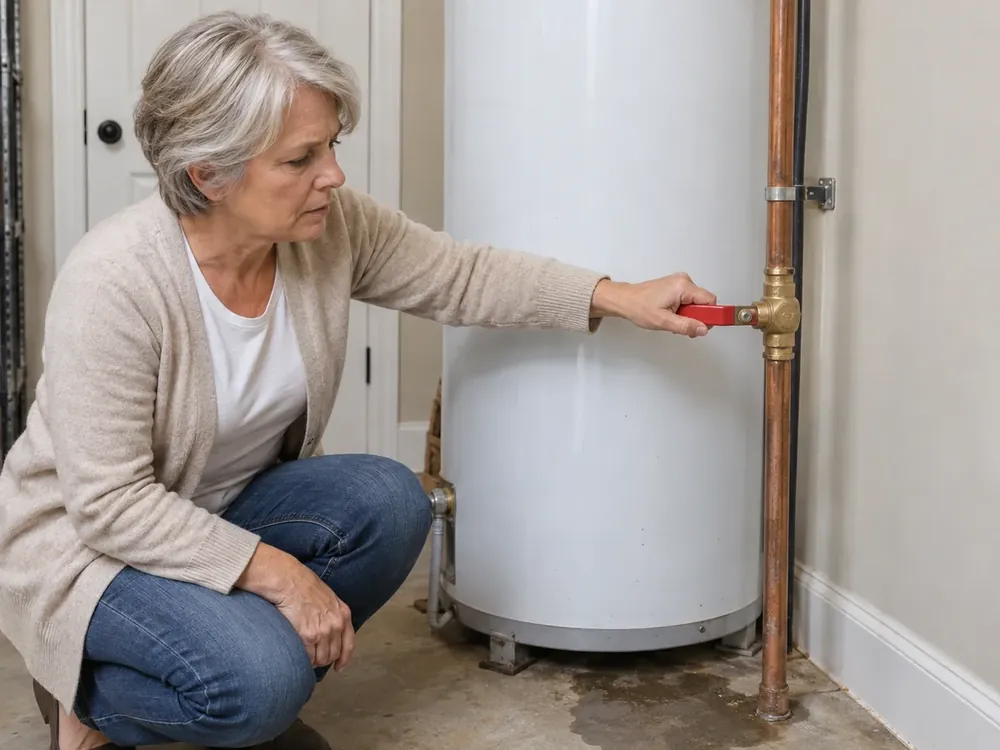
Shutting Off Water and Drying Rooms After a Break
A broken supply pipe needs the incoming water stopped, the pipe repaired and the wet rooms dried. Call about the spreading water immediately; locating a valve isn't a condition for getting help.
Bathroom Supply Lines
Water from a broken bathroom line can spray inside the vanity, soak the cabinet floor and move through joints in the flooring. What happens if a water pipe bursts depends partly on where the break is: an exposed connection may wet the cabinet first, while a hidden break can send water downstairs.
Close the sink's supply valve if it is safely reachable and actually controls the leak. If water keeps escaping, use the main shut-off when you can reach it without crossing wet floors near electricity. Your technician checks the vanity and bathroom floor, then follows moisture into adjoining rooms. Mention any dripping ceiling below the bathroom during the call.
Utility Room and Main Shut-Off
The main shut-off controls the incoming household supply, but its location varies between homes. Look for an existing valve tag or the visible point where the supply pipe enters the building, using only dry, accessible areas. OWASA guidance published by the Carrboro Citizen identifies a basement, crawl space, utility room or front closet as possible valve locations.
Don't enter a flooded crawl space to search. If shutting off the supply requires work at the meter, contact the utility or a plumber rather than forcing unfamiliar hardware. The same OWASA guidance warns that improper operation can damage the meter assembly.
Once the main is closed, open safely accessible sink faucets to let remaining water drain. Don't drain the water heater or restart the supply yourself after a suspected break. Tell the plumber which valve was closed.
Kitchen Sink and Exterior Wall
A kitchen line can leak into the sink base and beneath flooring before water reaches an open walkway. If you're wondering what happens if a pipe bursts behind that cabinet, water may follow the wall or floor rather than forming a puddle directly below the break.
Keep away from wet outlets and the dishwasher. From a dry location, switch off the affected power at a safely accessible, dry breaker panel; don't touch a panel that has become wet. CDC guidance calls for an electrician when reaching the shut-off would mean entering water. Your technician measures the cabinet and nearby floor to establish how far moisture has spread.
Crawl Space During Cold Weather
Pipes in an unheated crawl space or exterior wall can freeze during severe cold. The National Weather Service's cold-weather preparedness guidance includes protecting household pipes against freezing. The NWS explanation of frozen pipes describes how expanding ice can cause a pipe to burst.
Q: How does a burst pipe happen, and can a leaking pipe burst? A: Freezing can split a pipe, and an existing leak can develop into a larger failure; a plumber determines the cause and condition of the line. Report leaks or a loss of flow rather than attempting to thaw or repair the pipe.
Your technician checks whether escaping water has also soaked insulation or the subfloor beneath occupied rooms. Call from inside a dry room or another safe place and describe what you can observe without going under the house.
Ceiling Below an Upstairs Room
A pipe break upstairs can fill the ceiling below, producing stains, drips or a downward bulge. Keep the room beneath clear, and don't put a bucket under the bulge if doing so requires standing beneath it. Take photos from outside the room.
A plumber repairs the water line; your technician evaluates wet ceiling materials and the surrounding rooms for drying. The two tasks address different parts of the damage.
| Affected place | Plumbing task | Water damage task |
|---|---|---|
| Bathroom vanity | Stop the supply leak | Check cabinet and subfloor moisture |
| Kitchen wall | Locate and repair the break | Measure adjacent wall and floor moisture |
| Crawl space | Repair the damaged pipe | Remove water and assess wet materials |
Laundry Room and Carpeted Hallway
Water reaching the laundry doorway or hallway carpet needs extraction and moisture checks even after the pipe is repaired. Leave wet appliances alone, and move belongings only when they're safely reachable without contact with contaminated water.
Your technician records the affected rooms, removes standing water and arranges drying for materials that can be retained. Photograph the water's path for your records. A local water damage partner in our network reviews the drying scope and its cost with you before starting work. Call about every room the water has reached, including the floor below.