
The short answer
- In the kitchen, photograph wet cabinet bottoms and flooring from a safe, dry position for your damage records.
- For a stained ceiling, keep pictures alongside your technician's moisture readings and written scope of work.
- For damaged bedroom contents, build an item list and retain purchase records and emergency expense receipts for your insurer.
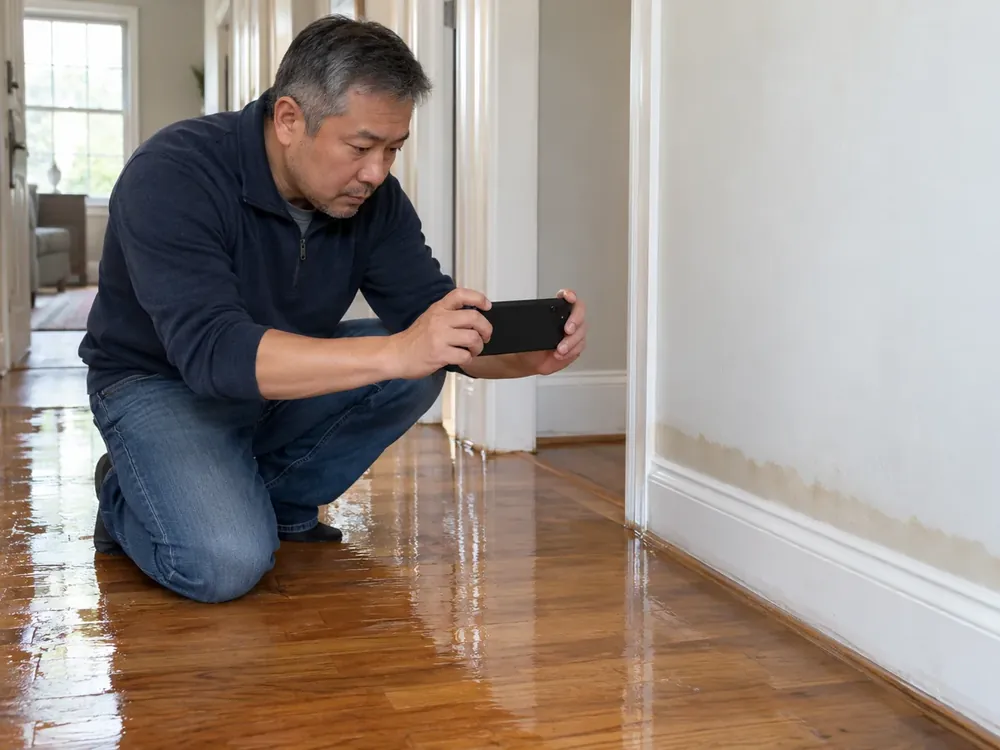
Damage Records for Each Wet Room
Room labels keep photos, moisture readings and receipts connected to the damage they describe. Call about the water now; collecting records can happen alongside the response. Coverage questions belong with your own policy and insurer. The page below stays with the records you can keep.
Kitchen Cabinets and the Leak Source
Kitchen records should show the wet cabinet, the surrounding floor and the visible leak source. A supply line can soak the cabinet bottom and carry water beneath nearby flooring. From safe footing, photograph the whole kitchen first, then close-ups of swollen cabinet edges, wet boards and damaged contents before anything is moved. Add a short video showing how the affected areas connect.
Close the fixture valve or main water valve only if you can reach it safely. Leave pipe repairs to the appropriate trade. Your technician checks moisture around the cabinet base and adjacent floor, then records the affected materials. Call while the water is spreading; photographs aren't a condition for getting help.
For insurance documentation after a broken pipe, record the water damage you can see and when you noticed it, without guessing at a hidden cause. The North Carolina Department of Insurance advises keeping photographs from before and after emergency repairs, along with receipts.
Bathroom Water and the Ceiling Below
Bathroom documentation should connect the wet vanity or floor with any staining in the room underneath. Photograph a ceiling's brown ring, drips and nearby wall damage from outside the affected area. Stay out from under a sagging ceiling and don't puncture it to release water.
Your technician records moisture in the ceiling and adjoining surfaces after assessing safe access. Keep those readings and the written scope with the bathroom photographs. A ceiling water damage insurance claim file can use separate room labels for the upstairs bathroom and downstairs ceiling, so the pictures aren't mixed together. Call and describe both rooms during the conversation.
Laundry Room Receipts and Damaged Contents
Laundry room records should follow the water from beneath the washer into the hallway and any adjoining carpet. Photograph wet contents in place when safely accessible. Once photographed, lift reachable valuables and loose rugs away from wet floors only when the water is known to be clean and the route is safe.
Use a simple inventory to connect each damaged item with supporting records. FEMA's National Flood Insurance Program recommends documenting damage with photos, keeping receipts and retaining material samples when appropriate.
| Room or item | Damage record | Supporting paperwork |
|---|---|---|
| Laundry room floor | Wide view and close-ups of wet edges | Moisture readings and written scope |
| Hallway rug | Photos of the rug and affected area | Purchase receipt, if retained |
| Bedroom furniture | Overall view and damaged sections | Item description and ownership records |
| Emergency work | Photos before and after the work | Dated invoices and payment receipts |
Keep water damage restoration records in your insurance folder, separate from purchase receipts, with matching room names on both. Save copies rather than handing over your only originals.
Basement and Crawl Space Records Without Entry
Basement and crawl space records can begin with photographs from a dry, safe entrance. Don't enter standing water near outlets, cords or appliances. The CDC's electrical safety guidance says never to enter water to reach the main switch; operate the breaker only from a dry, safe location. Avoid sewage and floodwater contact.
Your technician first assesses access and hazards before documenting lower walls, insulation and stored belongings. Keep photos of water lines on walls, wet floors and damaged storage items when safely obtainable. Call from outside the wet area and explain what is visible.
Carpeted Rooms and the Paperwork Folder
Carpeted room records should include the carpet, its edges and nearby baseboards, along with the technician's findings about underlying materials. Keep removed materials when safe and appropriate, or retain clear photographs and identifying details. The North Carolina Department of Insurance's disaster advice directs consumers to consult their insurer about disposing of damaged materials or belongings; don't handle contaminated debris to preserve a sample.
Keep your policy number and insurer's claim line with the room folders. NC DOI's documentation checklist identifies the policy number, a damage summary, photographs and a home inventory as useful information. One of our local water damage partners explains the proposed scope and cost factors before work begins. Call about the wet room now, and keep adding records as the work progresses.