
The short answer
- A bathroom leak that reaches several rooms needs more moisture checks and drying work than water confined to one accessible surface.
- Sewage or floodwater in a basement changes cleanup methods and which wet materials can remain.
- Kitchen cabinets, carpet pad, hardwood and ceiling materials need different drying or replacement work, so the affected layers shape the total cost.
The Rooms and Materials That Shape the Work
Water damage restoration price depends on the water's spread, contamination, affected materials and the work required to dry or replace them. Call about the wet rooms now; you don't need to work out the floor area first.
Bathroom and the Room Beneath It
A leak contained inside an accessible vanity needs a different scope from one that soaks the bathroom subfloor and ceiling below. The visible puddle doesn't show every affected layer. Your technician checks the cabinet, floor edges and downstairs ceiling to identify connected damage.
How much water damage will cost to fix depends on those findings, including whether the materials remain sound. Keep clear of a sagging ceiling and leave wet electrical fittings untouched. During the call, describe both the source room and any damage below it.
Kitchen Cabinets and Flooring
Kitchen water can travel beneath cabinets, under a dishwasher and between flooring layers. An open floor is easier to reach than a wet cabinet base tucked behind fixed units. Swollen cabinet panels, wet insulation and damaged wallboard may add replacement work beyond extraction and drying.
A water damage repair price should distinguish drying retained materials from rebuilding damaged ones. Your technician checks moisture around the cabinets rather than treating the kitchen's visible floor as the whole job. You can close a safely reachable fixture valve, but leave appliance movement and material removal to the people doing the work.
Carpeted Rooms and Hardwood Floors
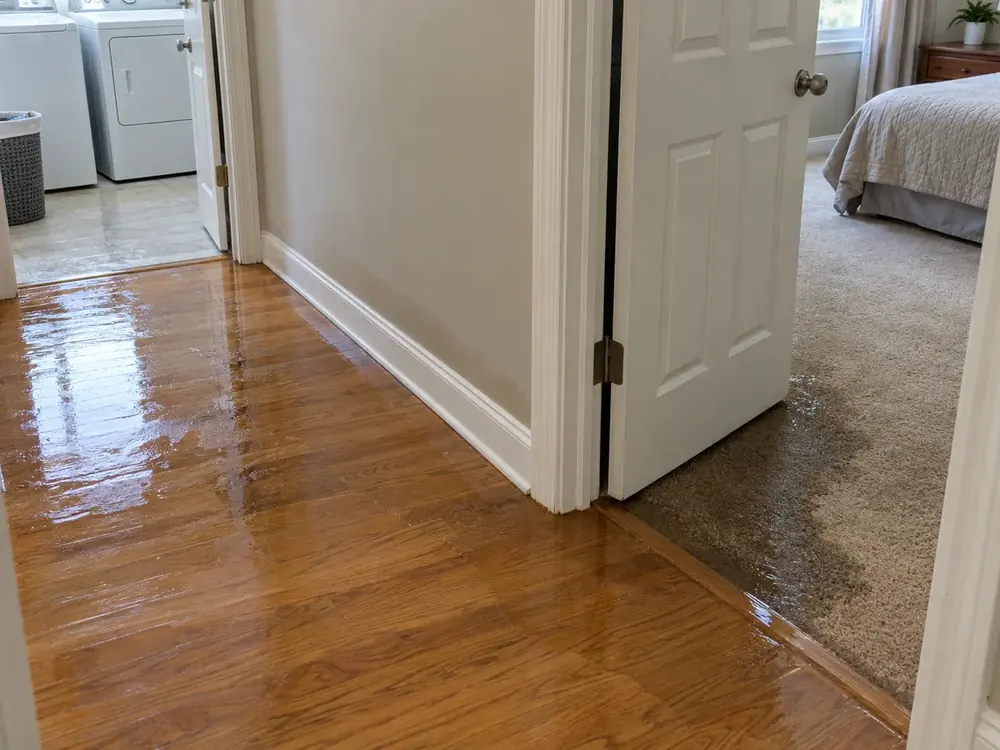
Water damage floor repair cost changes with the flooring layers, the area affected and whether those layers can remain. Carpet, pad, wood boards and subfloor each need assessment. A hallway leak that reaches two bedrooms adds separate surfaces and doorways to the drying plan.
The time water has been present matters because moisture can spread into absorbent materials. Lift loose rugs and valuables only when a clean supply leak has affected a safely accessible area. Don't handle rugs exposed to sewage or outdoor floodwater.
Your technician uses moisture readings to plan equipment placement and follow drying progress. The EPA's material-specific drying guidance describes different approaches for carpet, wood and drywall, including the need to address wet underflooring. A dry surface alone doesn't establish that the whole floor is ready for repairs.
Basement and Crawl Space
Basement flood cleanup cost reflects the amount of water, contamination, access and the materials below the waterline. A clear route across an unfinished floor differs from a tight crawl space with wet insulation beneath the kitchen. Your technician assesses access and removal needs without requiring you to enter either space.
Clean supply water, sewage and outdoor floodwater require different handling. The CDC's floodwater advice explains that floodwater may carry sewage and other contaminants. Avoid contact and call from a dry area. Cleaning affected surfaces and removing unsuitable porous materials can add work beyond pumping water.
Ceilings and Walls Between Rooms
Ceiling water damage repair cost includes more than covering a stain when the material above remains wet. Your technician checks the affected ceiling and adjoining walls for moisture. The repair scope may include drying sound materials, removing damaged sections and restoring the finish after drying.
Photograph stains from a safe doorway. Don't cut into a wall or puncture a ceiling to investigate. A room-by-room scope should identify where repair work is needed so ceiling work doesn't get confused with drying the floor above.
| Room or location | Factor that changes the work |
|---|---|
| Bathroom over a living room | Moisture across two levels |
| Kitchen | Water trapped around fixed cabinets |
| Carpeted bedroom | Wet pad and subfloor beneath the carpet |
| Crawl space | Restricted access and soaked insulation |
| Laundry room and hallway | Water reaching different floor finishes |
Laundry Room and Drying Equipment
A washer leak crossing into the hallway may require drying equipment in several connected spaces. Equipment type, the number of units and the days needed all affect charges. Your technician follows moisture readings to decide when drying is complete; a fixed calendar alone doesn't establish that materials are dry.
Evening or overnight work can also affect labor charges. The written scope should explain timing-related charges, equipment use, follow-up moisture checks and any removal or rebuilding work. Keep photos and receipts with the room descriptions.
A page cannot responsibly price unseen wet layers or determine their condition from room size alone. One of our local water damage partners will review the room-by-room scope and price with you before any work starts. Call while the water is spreading; the assessment establishes what needs doing.