
Chapel Hill, North Carolina
Commercial Water Damage Restoration in Chapel Hill, NC
Our local water damage professionals remove water and dry affected business interiors in Chapel Hill. When a restroom backup reaches a sales floor or an office ceiling leaks onto carpet, call now to discuss the building and the rooms involved.
- Calls answered 24/7
- Offices, stores, restaurants, apartments
- Serving Chapel Hill and nearby
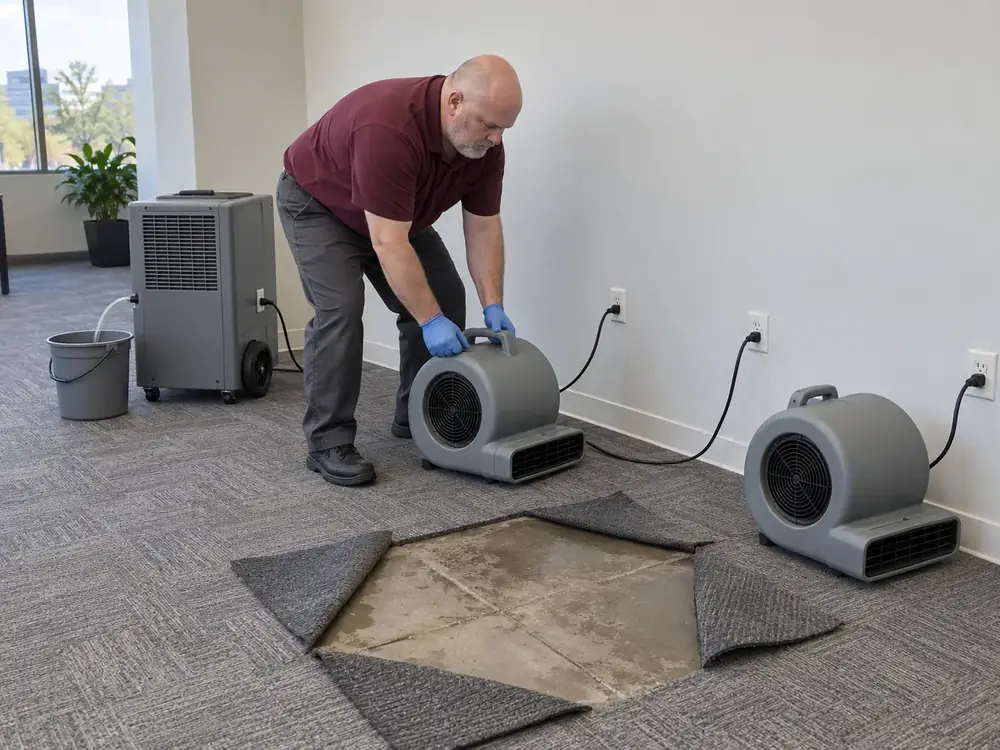
Commercial Restoration Services Across Chapel Hill Buildings
- Offices: Flat-roof leaks can stain suspended ceilings and soak carpet tiles around desks, so the first assessment follows moisture above and below the visible drip.
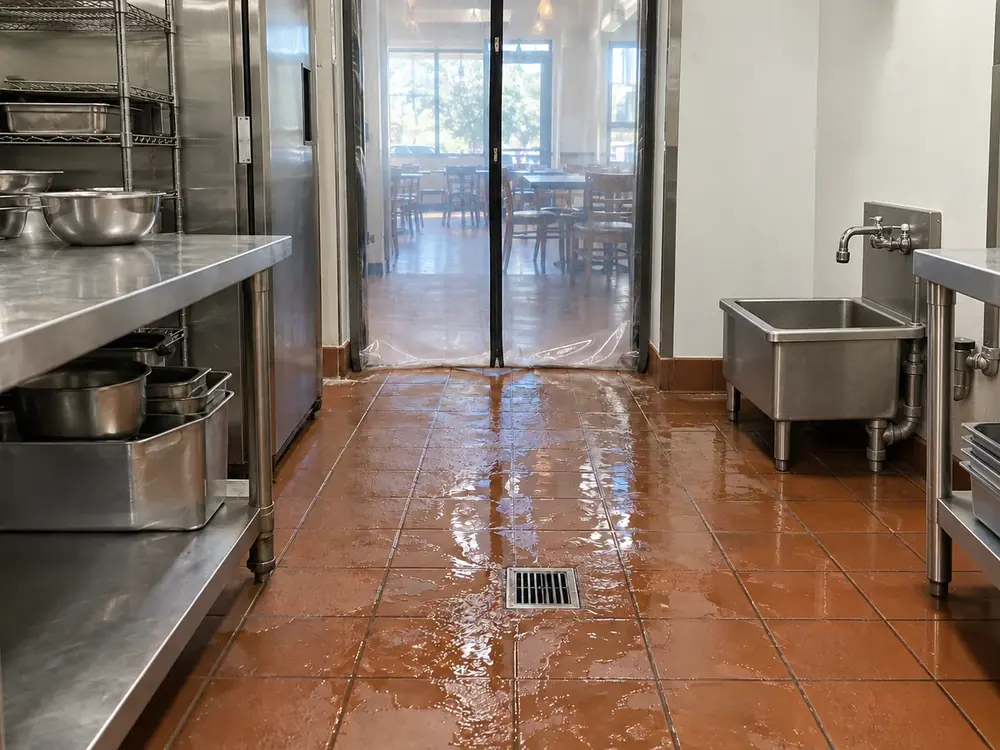
- Restaurants and bars: Dish-area supply failures or floor-drain backups spread water beneath prep tables, where cleanup starts with identifying contamination and restricting access.
- Retail stores and shopping centers: Restroom leaks reach stockrooms and sales floors, making a dry customer route and protected inventory early priorities.
- Warehouses and storage: Supply or sprinkler line failures wet concrete and the bottoms of stored cartons, requiring attention to access lanes and affected stock.
- Apartment buildings: Apartment water damage can travel from an upstairs bathroom into the ceiling and walls of the unit below, so assessments follow connected rooms.
- Schools and churches: Mechanical room overflows can reach nearby corridors and carpeted meeting rooms, requiring affected routes to be separated from occupied spaces.
- Hotels: Bathroom leaks spread into guest room carpet and adjoining units, where room access and moisture checks guide the drying plan.
Common Sources of Water in Business Interiors
- Supply and sprinkler lines: A failed line can send water across office floors or through ceiling tiles. Keep people clear and call; sprinkler system work stays with the appropriate professional.
- Roof leaks over offices: Drips above desks may conceal wet ceiling materials beyond the stain. Your technician checks the affected rooms and identifies materials that cannot be dried.
- HVAC drains above corridors: Condensate overflows can wet overhead panels and wall edges. Commercial water damage cleanup follows the moisture path while equipment repair addresses the source separately.
- Restroom and floor-drain backups: Water reaches adjoining hallways or the kitchen floor. Restrict access and leave contaminated cleanup to workers with appropriate protection, rather than assigning unprotected staff.
- Kitchen and dishwasher connections: Supply water runs beneath equipment and into wall bases. Commercial water extraction removes accessible pooled water while moisture readings establish the drying area.
- Mechanical rooms and warehouse stock: Water surrounds equipment or soaks cartons on the floor. Keep staff outside wet electrical areas; your technician plans access, drying zones and records of affected stock.
Operating Options While Affected Rooms Dry
The affected rooms, contamination and safe access determine whether any part of the building can remain occupied.
| Option | When it fits | What it involves |
|---|---|---|
| After-hours extraction | An isolated wet office or retail area can stay secured until planned work begins. | Coordinate entry, extraction equipment and access restrictions around the building's operating schedule. |
| Phased drying | A wet kitchen corridor or suite can be separated from safe occupied areas. | Use containment, controlled equipment placement and protected routes while checking adjoining rooms for moisture. |
| Full closure | Widespread water or contamination prevents safe separation of occupied spaces. | Restrict access across the affected building while commercial flood cleanup and drying proceed. |
Your technician decides on site which option fits the rooms, hazards and access conditions.
The Commercial Cleanup Call and Work Plan
- Call and describe the building, the wet rooms and what the water is doing now. Mention occupied suites, affected stock or water near electrical equipment during the conversation.
- Your water damage professional takes it from there, discussing entry arrangements and the affected areas with the owner, manager or designated building contact.
- Your technician traces the source, maps moisture through rooms and floors, and explains the scope and price before work begins, including any proposed containment.
- Extraction and drying proceed with daily moisture readings. Records show the areas treated, materials removed and drying progress for the property manager or owner, along with remaining repair needs.
Room and Unit Records for Property Managers
Keep the work records organized by room, suite or unit so owners and managers can follow the damage and drying work.
- Photos: wide views and close details of wet office ceilings, restroom floors, stock and damaged contents before and during work, taken from safe areas.
- Measurements: moisture readings and the drying log for each affected area.
- Scope: written details of extraction, drying and materials removed, with commercial water damage repair listed separately where needed.
- Receipts: keep cleanup, storage and repair receipts together.
- Occupancy log: note which units, suites and tenants were affected and the dates of access restrictions.
Commercial Water Damage Cost Factors in Chapel Hill
The number of affected rooms and the work needed to separate them from occupied areas shape commercial cleanup costs.
- Offices and suites: wet square footage, floors involved, ceiling tiles, drywall and carpet layers.
- Restrooms and kitchens: clean supply water versus sewage, and how long materials stayed wet.
- Warehouses: affected stock, equipment access and the space needed for extraction.
- Throughout the building: drying equipment, containment, drying duration, after-hours scheduling and phased work.
Before work begins, one of our local water damage partners discusses the proposed building scope and its price with your designated contact. See the cost factors for water damage work.
Why Businesses Call Dogwood Water Damage
- Calls answered 24/7: Report a wet warehouse floor, an overflowing restroom or a ceiling leak whenever you discover it, including outside normal business hours.
- One call starts the work plan: Describe where water is spreading during the call, and your technician takes the next steps with your building contact.
- A defined scope: Extraction, drying areas and price are explained before work starts, so managers know which rooms and materials the work addresses.
- Records for the building: Photos, moisture readings and written work details help owners track the affected suites and rooms.
- Area coverage: The same line serves business properties in Chapel Hill, Durham, Cary, western and northwestern Raleigh, and Mebane.
Keeping People Away From Water Hazards
Separate staff and customers from wet sales floors and corridors; OSHA's walking surface requirements call for guarding hazards until they are corrected.
- At the mechanical room, keep people outside flooded electrical areas and away from wet equipment, consistent with OSHA's flood electrical precautions.
- At restroom and kitchen drains, prevent contact with suspected sewage and never assign unprotected staff to cleanup; OSHA describes sewage contamination hazards and contact precautions.
- Around wet office outlets or appliances, do not operate switches or equipment while standing in water, as the CDC warns.
Call from a dry part of the building and describe which rooms are affected.
Homes too
Water Damage Help for Your Home Too
Owners and managers can use the same line for extraction, burst pipe damage or flood cleanup in a kitchen, basement or other room at home.
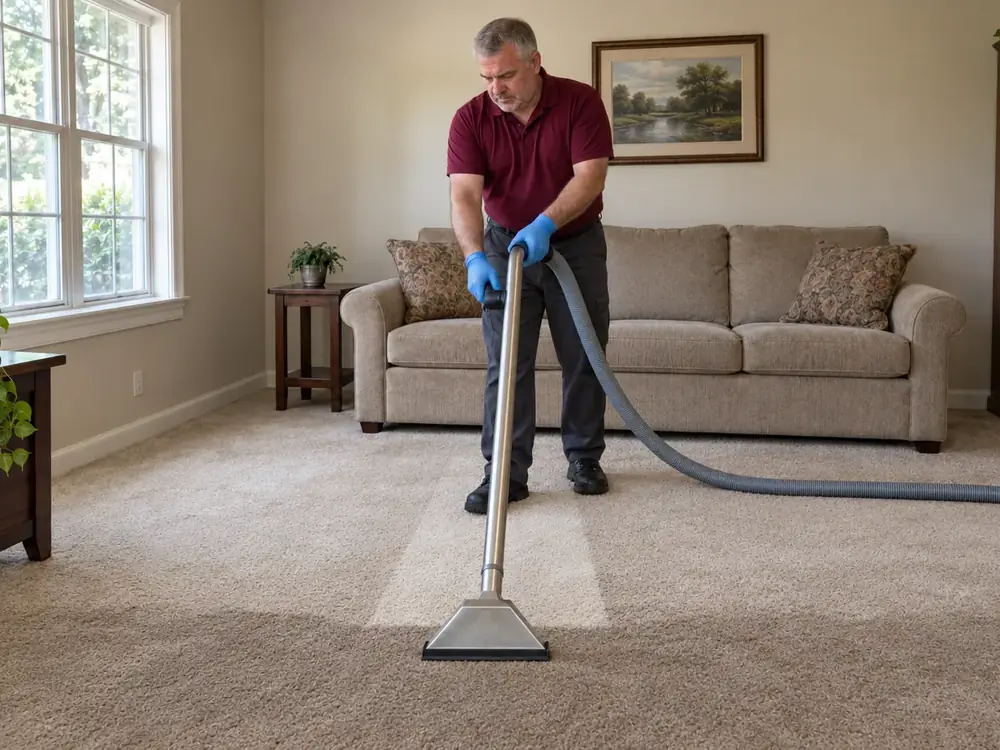
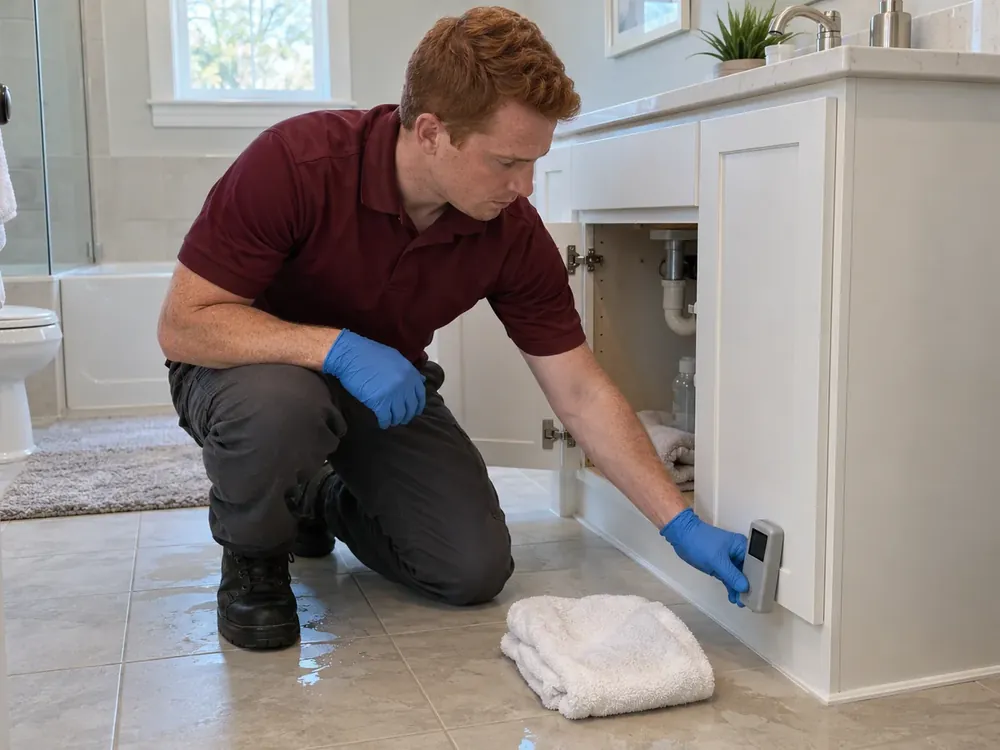
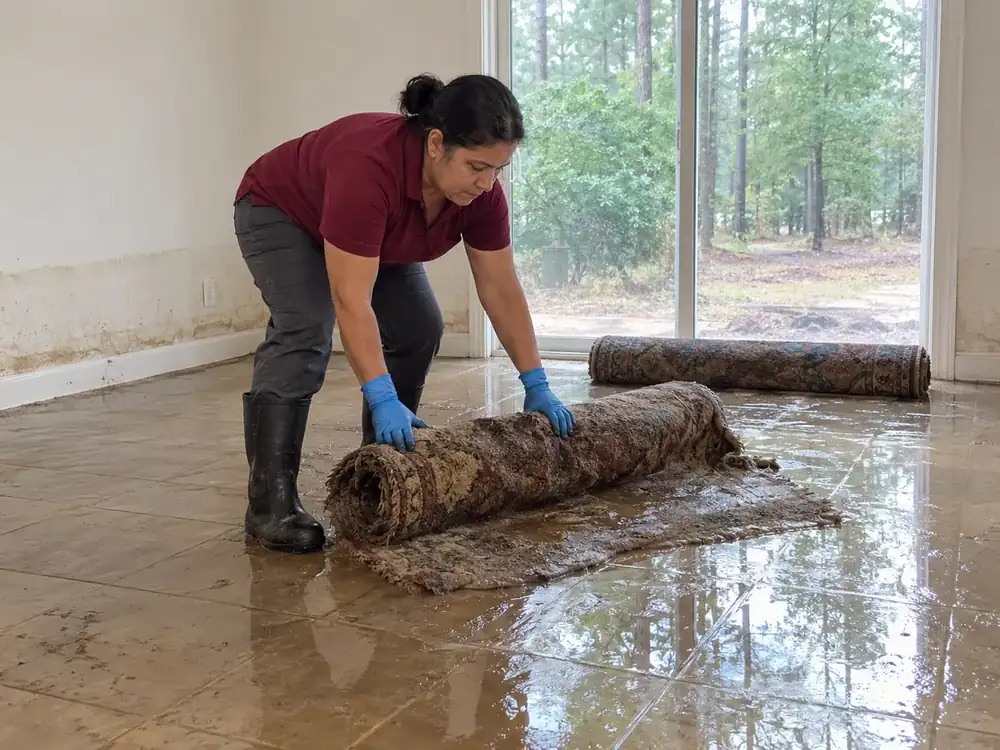
Business Properties Around Chapel Hill
Commercial cleanup extends from Chapel Hill and Carrboro to Durham, Cary and Mebane, plus western and northwestern Raleigh; call about the wet rooms in your building.
Commercial Water Damage Restoration FAQs
Does the same number handle business buildings and homes?
Yes, the same line handles commercial buildings and homes around Chapel Hill. If you need commercial water damage restoration near you, call about the office, shop, warehouse or rental property involved. For business water damage restoration, describe where water started, how it is spreading and which occupied rooms are affected.
Can my business stay open during drying?
Part of a business can stay open when the affected rooms can be safely separated from occupied areas. A leak isolated to an office suite differs from sewage spreading through a shared corridor. Your technician assesses containment, access routes, moisture spread and equipment placement on site before recommending phased work or closure of the affected space.
What should a property manager do first when water appears?
Call about the water and keep people away from affected rooms, especially wet electrical areas or backed-up drains. Describe which suites or floors are involved while the call starts the next steps. Share observations from dry areas; staff should not enter standing water to move equipment, reach controls or collect photos.
Who should call about a leak in a building with several tenants?
The owner, property manager or designated building contact can call to coordinate a leak affecting several tenants. A tenant discovering water should report it to building management promptly. During the call, identify the unit where water appeared, rooms below it and shared areas getting wet so access and moisture checks can be coordinated across the affected spaces.
What records should the building owner keep?
Keep dated photos, moisture readings, drying logs, the written work scope, receipts and a list of affected rooms or units. For an office ceiling leak, include the ceiling area, carpet below and damaged contents. For a warehouse, record stock locations and affected items. Those records document the damage and work performed for the owner or property manager.
What affects the cost of commercial cleanup?
Area, water contamination, affected materials, drying time and access determine the work involved. Several wet apartment ceilings require a different scope from one office carpet area. Containment, after-hours scheduling, phased work and the equipment needed also affect cost. The scope and price are explained before work begins, with repair tasks distinguished from extraction and drying.
If water is spreading through your office, kitchen or rental units, call now and describe the rooms needing commercial cleanup.
Call (919) 343-9143