
The short answer
- In a wet kitchen, restoration starts with finding the moisture's extent and removing water around cabinets and flooring.
- In carpeted rooms, drying includes the underlying materials, with readings used to track progress toward a dry standard.
- For damaged ceilings and walls, restoration includes cleaning and repairs after the leak is corrected and retained materials are dry.
The Work From Wet Rooms to Finished Repairs
The water damage restoration process moves from assessing moisture to removing water, drying and cleaning, then rebuilding damaged finishes. Each room needs its own checks because a dry-looking floor can sit above wet materials. Call about the affected room now; your technician starts by assessing the source, hazards and extent of the moisture.
Kitchen Inspection and Moisture Mapping
Kitchen inspection establishes how far water has moved beyond the visible puddle. A dishwasher leak can run along a cabinet base and beneath adjacent flooring. Your technician checks the cabinet bottom, floor edges and adjoining rooms, recording moisture locations and readings before setting the drying plan.
Shut the fixture valve or main only when safely reachable. Keep clear of wet appliances and wiring; the CDC warns against entering standing water to reach a power switch. Switch off power at the breaker only from dry, safe footing. Describe the kitchen during the call without moving appliances to expose the leak.
Laundry Room Extraction and Material Removal
Laundry room extraction removes water from the floor and affected carpet after access is made safe. A washer leak can soak hallway padding beyond the laundry doorway. Your technician uses suitable extraction equipment, checks the adjoining rooms and identifies materials that cannot be dried or cleaned adequately.
Removal decisions follow the water source and material condition. The EPA's clean-water damage table distinguishes materials that may be dried from materials requiring replacement and emphasizes drying the subfloor as well as the floor covering. Leave removal to your technician. From a safe route, lift valuables and loose rugs only when the water is known to be clean; take photos without delaying the call.
Carpeted Rooms and Measured Drying
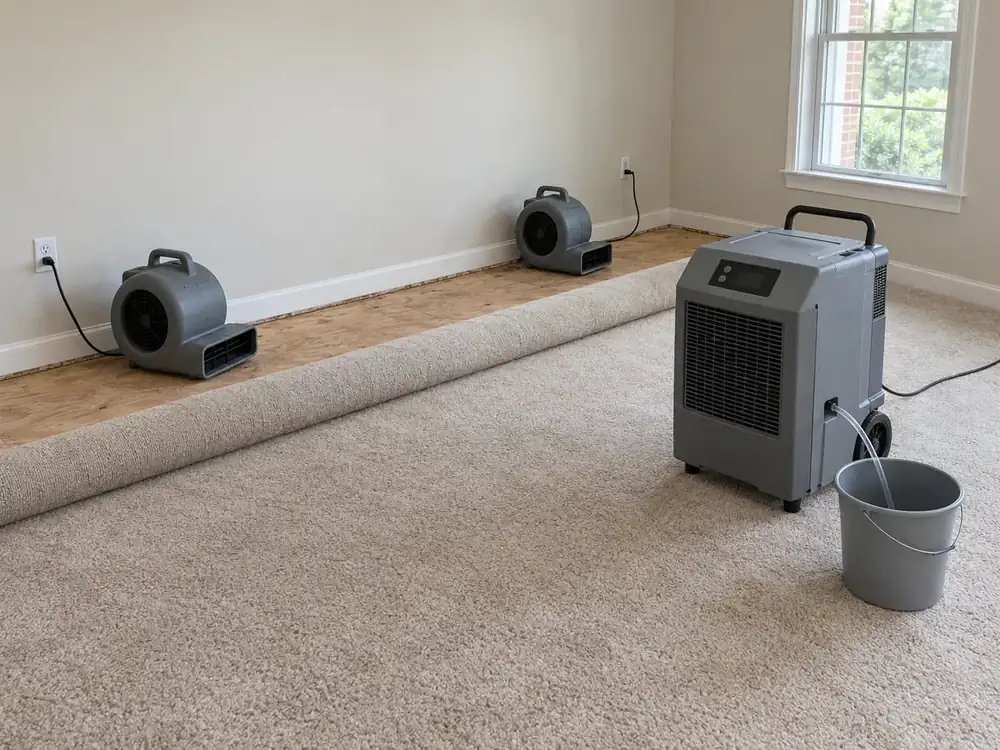
Carpeted rooms need moisture removal below the walking surface as well as from the room air. Air movers circulate air around wet materials, while dehumidifiers collect moisture from that air. Your technician takes daily readings at recorded locations and adjusts the equipment until retained materials reach the dry standard established for the job. Call to discuss who fixes water damage to your living room floor and how drying and repairs fit together.
Drying time depends on water volume, material thickness, how long materials stayed wet and indoor conditions. Outdoor humidity and weather affect drying choices too. The EPA's flood cleanup guidance describes drying as commonly taking several days to weeks; that broad guidance doesn't set a completion date for a particular room. A carpet surface feeling dry doesn't establish that the padding or subfloor is ready.
Basement and Crawl Space Cleanup
Basement and crawl space work starts with safe access and the condition of the water. Wet insulation, stored contents and hidden floor framing can add work beyond removing a visible pool. Stay outside flooded areas: the CDC's floodwater guidance advises avoiding contact with floodwater, which may contain sewage and other hazards.
Your technician plans removal, drying and cleaning around the affected materials and contamination. Clean supply water and sewage require different cleanup decisions. Cleaning follows removal of unsalvageable materials and drying, with additional cleaning during the work as needed. Call from a dry location and describe water under the house rather than entering to measure it.
Bathroom Ceilings and Finished Repairs
Ceiling repairs follow correction of the leak and drying of materials that will remain. Beneath an upstairs bathroom, water may stain drywall, damage insulation and reach a wall below. Keep everyone away from a sagging ceiling. Your technician assesses the ceiling and traces moisture into connected surfaces before repair planning.
Homeowners asking who fixes water damaged ceilings need the leak repair, drying work and ceiling finishing coordinated. Restoration repairs can include replacing drywall, restoring flooring and rebuilding damaged cabinets. One of our local water damage partners reviews the room's scope and cost factors with you before work starts. Keep photos, moisture records and the written scope together as the room moves toward repairs.
Room Conditions and Stage Timing
Stage timing follows the room's measured condition and repair scope. Inspection and extraction belong at the beginning; drying continues through repeat checks, and finishing waits for suitable material conditions.
| Stage | Room example | What affects the duration |
|---|---|---|
| Inspection and mapping | Wet kitchen cabinet and adjoining floor | Access, hidden moisture and number of rooms |
| Extraction and removal | Laundry water reaching carpet padding | Water volume, contamination and damaged layers |
| Drying and dehumidifying | Bedroom subfloor and lower wall | Material depth, daily readings and humidity |
| Cleaning | Basement surfaces and retained contents | Water source and materials that can be cleaned |
| Repairs and rebuild | Bathroom ceiling, flooring or cabinets | Drying completion, repair extent and material delivery |
Major flooding can extend drying substantially: the American Red Cross notes that structural drying may take weeks or months depending on damage. Inspection may fit within a visit, while extraction, removal and cleaning can require repeated work periods across several rooms. Repairs follow their own schedule for installation and finishing. Call to discuss the wet rooms; progress checks give your technician a basis for updating the sequence.