
The short answer
- In the kitchen or bathroom, call for water damage help and close the leaking fixture's valve only if it's safely reachable.
- In rooms with standing water near outlets or appliances, stay out and shut off power only from a dry location.
- Beneath a sagging ceiling, keep everyone away and photograph the damage only from a safe doorway.
Safe First Steps for Each Wet Room
Call for help with the wet room now; safe shut-offs and photos can happen while help is being arranged. You don't need to find the leak or measure the damage to describe what's happening.
Basement and Crawl Space
Water below the house can wet stored belongings, insulation and the underside of the floor above. Stay at a dry entrance rather than entering a flooded basement or crawling beneath wet wiring. If you're deciding what to do when your house is flooded, start by keeping people away from the water.
The CDC's floodwater guidance advises avoiding contact with floodwater, which may contain sewage or debris. Leave contaminated belongings in place. Your technician first checks safe access, the water source and the depth before choosing a removal method. Call and say whether the water is below a bathroom, kitchen or another room.
Kitchen
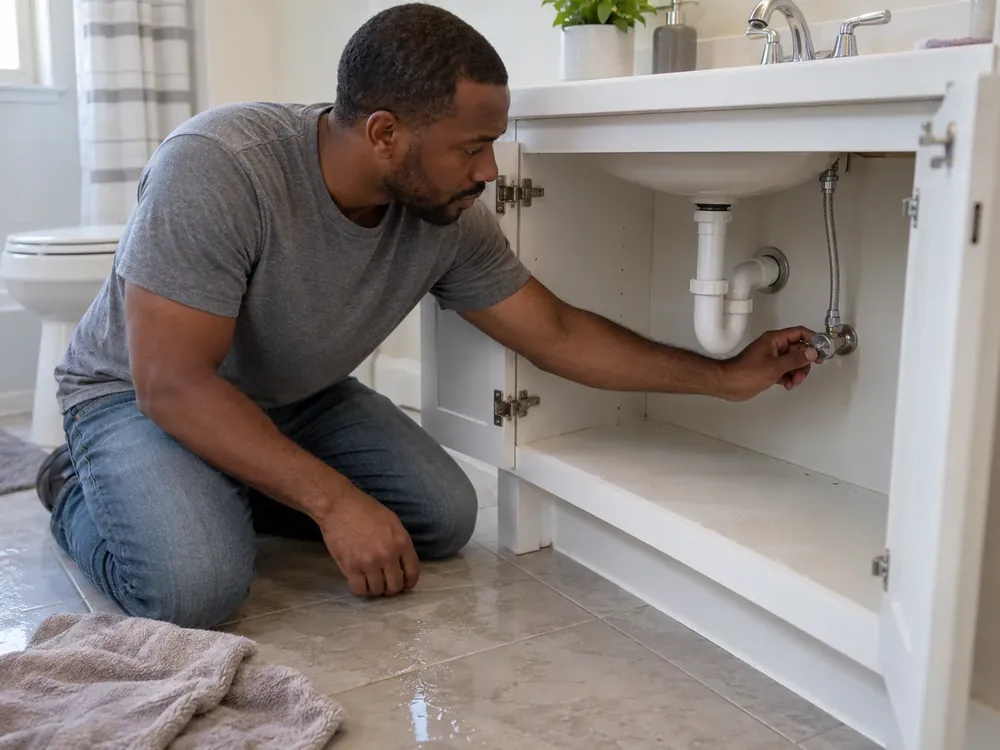
Water under a sink can soak the cabinet bottom and escape beneath nearby flooring. Close the fixture valve only if you can reach it safely without stepping into water or touching wet electrical equipment. Use an accessible main shut-off if the fixture valve doesn't stop the flow. Don't reach behind a wet dishwasher or refrigerator.
Your technician checks the cabinet base, adjoining wall and floor beyond the visible puddle. Water beneath cabinets may need attention even when the kitchen tile looks dry. Describe any water reaching the next room during the call.
Bathroom
A supply leak can soak the vanity, bath mat and subfloor before water appears in the hallway. An overflowing toilet needs a different approach: avoid contact with the water and keep children and pets away. A fixture valve can stop incoming supply water when safely reachable; it doesn't clear a blocked drain.
Photograph the room from a dry threshold. Your technician checks the vanity and floor edges, including any ceiling directly below the bathroom. Mention both rooms when you call if water is showing downstairs.
Ceiling
A bulging ceiling calls for an empty area beneath it because wet material can fall. Stay outside the affected space, and don't press, puncture or try to drain the bulge. If you need help deciding what to do about ceiling water damage, call from another room.
Wet light fittings also mean keeping away from switches and the water below. The CDC's electrical safety guidance says to switch off power only from a dry location and have an electrician handle an inaccessible shut-off. Your technician assesses the ceiling from a safe position and traces moisture toward the room above.
Laundry Room
A washer leak can run beneath the machine and across the doorway into carpet or hardwood. Leave the appliances in place. Close the washer supply valves only if the route and valves are safe to reach.
Your technician checks along the doorway and adjacent baseboards rather than stopping at the laundry floor. Call about the spreading water even when the washer has stopped running.
Carpeted Rooms and Floors
Carpet can hold water in the pad while nearby drywall and subfloor continue absorbing moisture. If you wonder whether water damage can fix itself, a dry-looking surface doesn't establish that the layers below are dry. Lift valuables and loose rugs only from safely accessible areas affected by a clean supply leak; leave sewage-soaked items alone.
A flooded house can sometimes be saved, but the condition of its structure and materials determines the repair plan. During the first visit, your technician records moisture readings, extracts water and sets up drying equipment suited to the affected materials.
| Where water remains | What the drying visit checks |
|---|---|
| Beneath bedroom carpet | Pad and subfloor moisture |
| Along hallway walls | Moisture above and behind baseboards |
| Under kitchen flooring | Water extending beyond the puddle |
The first day matters because water can spread into absorbent layers before damage becomes obvious. EPA moisture guidance recommends drying wet materials promptly to limit mold risk. Take photos of every affected room you can reach safely, including doorways connecting wet areas. One of our local water damage partners explains the proposed work and charges before drying begins. Call with the room where the water started and where it has reached.